PIXNET Logo登入

MarketMint – 鑄造你每日的Crypto市場洞察

跳到主文

Welcome to Our Blog – Your Frontline Source for Crypto Market Insights Stay ahead of the curve with real-time updates and in-depth analysis from the evolving world of the Crypto market. Our blog is dedicated to exploring the latest trends in DeFi, emerging Token economies, and breakthrough innovations in the Web3 space. Whether you're a newcomer seeking clarity or a seasoned investor looking for sharp insights, we deliver content that empowers smarter decisions in a fast-paced ecosystem. Join us as we decode the future of finance—one block at a time.

部落格全站分類:財經政論

  • 相簿
  • 部落格
  • 留言
  • 名片
  • 12月 05 週五 202516:49
  • Protocol X402: Payment Revolution and Compliance Challenges in the Machine Economy Era

Protocol X402: Payment Revolut


Introduction: From HTTP 402 to the Dawn of the Machine Economy


In 1996, the designers of the HTTP protocol reserved the “402 Payment Required” status code. However, due to the lack of supporting payment infrastructure, it became a “ghost code” of the Internet era.


Thirty years later, today, the X402 Protocol initiated and promoted by Coinbase has awakened this long-dormant status code into a “digital cash register” for AI autonomous transactions. When weather AI robots automatically purchase global meteorological data and self-driving cars instantly pay road tolls, the traditional payment logic chain of “account opening – authentication – authorization” is collapsing. Through the closed loop of “HTTP request – 402 response – on-chain payment – service delivery”, X402 has realized atomic transactions between machines without human intervention for the first time.


Behind this transformation lies the rise of the “Machine Economy”. Similar to the historical pattern where the Age of Discovery gave birth to insurance and the Industrial Revolution fostered commercial banks, the explosive growth of AI Agents is forcing an upgrade of financial infrastructure.


The X402 Protocol’s promises of “instant settlement, near-zero fees, and cross-chain flexibility” not only break through the efficiency bottlenecks of traditional payments but also push automated transactions into a legal and regulatory gray area.


Dissecting X402: How Can Machines Independently Complete a “Scan-to-Pay” Transaction?


The operation of X402 can be compared to a “unmanned convenience store” in the digital world:


  1. AI Initiates a Request: For example, if an AI needs to call a database API, it directly sends a resource request to the server.

  2. 402 Payment Challenge: The server returns an HTTP 402 response, with payment information similar to a “product price tag” attached—including the USDC amount, receiving address, and on-chain verification rules.

  3. On-Chain Signed Payment: The AI generates a transaction signature through an integrated Web3 wallet. Without the need for passwords or verification codes, it directly embeds the payment instruction into the HTTP request header.

  4. Blockchain Settlement: After verifying the signature, the server broadcasts the transaction. Once the blockchain confirms the payment (usually within 3-5 seconds), it grants the AI access to the requested data.


This “request-as-payment” model compresses the three steps of traditional e-commerce—”shopping cart – checkout page – payment completion”—into millisecond-level interactions between machines.


Its revolutionary significance lies in this: AI now possesses economic agency for the first time. It is no longer just a tool passively executing instructions but has become a “digital economic entity” capable of independently initiating transactions and fulfilling contracts.


Typical application scenarios include: AI agents independently purchasing cloud computing power, data queries, access rights to paid content, and calls to third-party AI models. However, while advancing such automated “agentic commerce”, relevant legal risks also emerge.


Risk Map: When Code Logic Collides with Legal Provisions


1. The “Soul Question” of AI Decision-Making: Who Bears Responsibility for Machine Errors?


In the X402 process, AI agents are responsible for initiating payment requests and executing signed transactions, which involves algorithmic decision-making and the automation of transaction instructions. Under the current legal framework, AI itself is not a legal person and does not possess independent subject qualification. Its operational responsibilities are usually borne by the human developers or operators behind it, and “decentralization” of the system does not exempt them from relevant liabilities.


If an AI’s decision-making process or results infringe on the rights and interests of third parties or violate laws, the responsibility generally falls on the organization or individual that designed, deployed, or owns the AI system. At the same time, automated decision-making itself involves a large amount of data—including user API call records, payment history, and potential user identity information—subject to privacy and algorithmic regulatory constraints.


2. The Compliance Divide in Wallet Models


The payment security of X402 depends on the choice of wallet, which may trigger completely different regulatory consequences:


  • Non-Custodial Wallets: If the AI uses self-custody wallets (such as MetaMask or hardware wallets) where users hold their own private keys, there are generally no KYC (Know Your Customer) requirements. However, users must bear the risks of private key loss and asset security on their own.

  • Custodial Wallets: If a third-party custodial wallet or crypto-asset service (such as an exchange or custodian) is used to sign transactions or hold funds, the service provider will be identified as an “account-based money transmitter”. It is required to apply for corresponding licenses in accordance with local regulations and meet compliance requirements such as KYC/AML (Anti-Money Laundering) and FATF Travel Rules. Failure to do so may result in administrative penalties or criminal liability.


3. On-Chain Interactions and Payment Crises


  • Identification of Payment Instruments: Stablecoins (such as USDC) currently used in X402 demonstrations are at the center of global regulatory “storms”, with different jurisdictions holding varying positions on stablecoins. In the United States, accepting or transmitting assets including Bitcoin, Ethereum, and stablecoins like USDC and USDT may be deemed as engaging in “money transmission” business, triggering regulation by FinCEN (the U.S. Financial Crimes Enforcement Network). Similarly, the EU’s MiCA (Markets in Crypto-Assets Regulation) classifies stablecoins as “electronic money tokens”, imposing requirements for licensing, reserve holdings, and prudent supervision.

  • Irreversibility of Payment Settlement: Once a blockchain payment is confirmed, it cannot be reversed. The X402 Protocol is designed to simplify small-value, high-frequency automated payment processes and does not have built-in robust functions for refunds, dispute resolution, or risk control—posing challenges to user protection. Many jurisdictions still lack consumer protection rules for crypto payments, meaning users must bear the consequences of transactions themselves. For example, if an AI agent mistakenly sends funds or is hacked, the funds can usually not be recovered.


4. Centralized Security Risks


The X402 Protocol itself is integrated into providers’ servers via lightweight middleware and is not an independent on-chain smart contract. In practice, many X402 projects deploy a service on official platforms; this service forwards on-chain interactions to the project party’s server, which then interacts with the blockchain to process token distribution.


This means that after a user enters into an on-chain contract with the project party, the project party must store the administrator’s private key on the server to call smart contract functions. This step exposes administrative permissions—if the private key is leaked, it will directly lead to losses of users’ assets.


In late October this year, @402bridge suffered a security incident caused by the leakage of the administrator’s private key, resulting in over 200 users losing USDC stablecoins worth approximately $17,693.


Therefore, when smart contracts are introduced to host payments or execute transactions, there is a risk of single points of failure or incorrect execution.


Exploring Compliance: Innovation and Regulation


Enterprises deploying X402 need to build a multi-dimensional compliance system:


1. Cross-Border Compliance “Navigation System”


  • Dynamic Regulatory Mapping: Switch compliance strategies based on the country where the transaction counterparty is located. After identifying the target market, enterprises should quickly complete compliance positioning and license layout. At the same time, establish a regular regulatory tracking mechanism to keep abreast of legislative and law enforcement trends in automated payments, digital assets, and other fields at home and abroad.

  • Strict AML/KYC Due Diligence: In accordance with FATF Travel Rules and regulatory guidelines of various countries, establish a sound system for customer identification (KYC) and transaction monitoring. Implement verification measures for the identity information and transaction purposes of both payment parties, and retain sufficient records of fund sources and uses. Conduct risk control on on-chain transactions (e.g., identifying terrorist-related and sanctioned addresses through on-chain analysis tools) to prevent money laundering.


2. “Dissection Techniques” for Subject Liability


  • AI Compliance and Privacy Protection: Evaluate AI models and decision-making processes to ensure compliance with the principles of algorithmic transparency and non-discrimination. Provide explainability mechanisms for personal-related decisions and allow users to appeal or request human intervention.

  • Legal Characterization and Protocol Architecture: Clarify the legal relationships in the protocol, such as the definition of AI agents, the legal attributes of tokens/stablecoins, and the functional role of relevant contracts. Sign clear service agreements with users and service providers, specifying the rights and obligations of both parties, dispute resolution mechanisms, and applicable laws.

  • Risk Diversification Measures: Given the irreversibility of digital payments and risks associated with smart contracts, consider adopting diversification measures. For example: set daily or per-transaction limits for AI agent accounts to avoid large-value payments; conduct independent security audits of smart contracts and establish an emergency “pause switch” mechanism. Particularly in the operation of custodial contracts, operators should also separate their operational funds from customer funds.


For end-users of X402-based automated payment services, protective measures should be taken to reduce legal and operational risks:


  • Prioritize Security Protection: Before use, verify whether the platform has the necessary financial licenses or compliance registration information. Do not easily click on unfamiliar links to trigger X402 payments, and avoid transactions with unlicensed institutions. Meanwhile, prioritize compliant and registered mainstream stablecoins as payment instruments. If using a non-custodial wallet, be sure to store the private key through secure solutions such as hardware wallets, and never store it in plain text on a network-connected server.

  • Manage Authorization Scope: Set strict transaction limits and authorization policies for AI payment agents. Exercise caution when approving “unlimited authorization” and regularly review and update authorization settings.

  • Retain Transaction Evidence: Keep complete records of on-chain transaction hashes, service agreements, and payment vouchers to ensure sufficient evidence for disputes.

  • Monitor Regulatory Developments: Stay informed about the latest regulations on crypto payments and AI decision-making in your jurisdiction to ensure that your usage remains compliant.


Conclusion: The Symbiosis of Code and Law


The birth of the X402 Protocol is analogous to how bills of exchange challenged the gold and silver standard in the 17th century—new economic forms always emerge before supporting rules. However, security incidents like the @402bridge breach also serve as a timely warning that the stability of technical infrastructure is just as important as the maturity of institutional frameworks.


When the EU’s MiCA Regulation requires monthly audits of stablecoin reserves, and when the U.S. SEC incorporates AI decision-making into the supervision of the Algorithmic Accountability Act, these provisions—though seemingly restricting innovation—are actually laying down “guardrails” for the Machine Economy.


Therefore, future competition will be a competition of compliance capabilities. After all, true innovation is never about subverting rules, but about filling the gaps in rules and writing new “grammar” for the economy of the future.


Mankun Law Firm specializes in the Web3 industry. For inquiries regarding compliance advice and license applications, please feel free to contact us. We will also continue to publish content on various blockchain compliance issues, paving a safe and compliant path for more entrepreneurs and investors. Stay tuned!


(繼續閱讀...)
文章標籤

matthewmkt0617 發表在 痞客邦 留言(0) 人氣(3)

  • 個人分類:
▲top
  • 12月 03 週三 202519:58
  • The First Hong Kong Crypto Asset Stock Has Arrived – Why Are More and More Web3 Projects Seeking IPOs?

The First Hong Kong Crypto Ass
Introduction
 
On December 1, 2025, HashKey Holdings Limited officially passed the listing hearing on the Main Board of the Hong Kong Stock Exchange, with J.P. Morgan, Guotai Junan International, and Haitong International serving as joint sponsors. As a leading platform holding a Hong Kong virtual asset trading license and covering businesses such as digital asset trading matching, on-chain services, and asset management, HashKey is also expected to become Hong Kong’s “first crypto asset stock”.


For the industry, this is not just a milestone for a single company, but a landmark event:


The first batch of regulated crypto platforms in Asia is stepping into the mainstream capital market.


The signal behind this is crystal clear:


The crypto industry is undergoing a structural transformation. The narrative that “issuing tokens = going public” is already outdated. More and more projects are realizing that relying solely on tokens—without establishing a corporate entity, issuing equity, or considering the capital market—can hardly sustain the next phase of growth. The HashKey incident stands as the strongest practical proof of this.


As a result, a new question emerges for all projects:


Why are more and more Web3 projects beginning to consider IPOs? Why is the “corporatization + equity financing + token” three-track model becoming the new normal?


Next, we will start by examining the ongoing changes in this industry.


The Good Days of Relying Solely on Token Issuance for Financing Are Truly Over


If you have still been following the old playbook from the last cycle over the past two years—


  • Whitepaper + private placement talks + listing on an exchange

  • DAO/foundation structure, and if all else fails, a shell company

  • Everything revolving around tokens, with equity treated merely as a “shell”


Then you have probably already noticed:


It’s harder to secure funds in the primary market; valuations in the secondary market are unsustainable; and regulators are keeping a closer eye.


Conversely, you will see another type of project quietly shifting gears:


First, establishing a solid corporate entity and conducting formal equity financing;


Continuing to develop tokens, but focusing more on ecological incentives and liquidity;


Setting long-term goals beyond just “listing on a CEX”—aiming to build a company that can go public, engage in mergers and acquisitions (M&As), and operate sustainably.


These projects are progressing more steadily and are more likely to secure large-scale funding. This is not just a shift in market sentiment, but a fundamental change in the cycle structure.


Why Did Everyone Disdain Equity and IPOs in the Last Cycle?


Looking back, it’s easy to see how logical the mindset was back then:


  1. Token issuance brought quick money


    No prospectus, no roadshows for institutional investors, and no need for years of financial report history. A whitepaper plus logos of several top VCs was enough to attract funds.


  2. Ambiguous regulation allowed “learning by doing”


    Many countries initially had no clear definition of “what tokens actually are,” so project teams used “innovation” and “technological experimentation” as a shield to forge ahead.


  3. DAO/foundation structures were appealing


    No shareholders, only a community; no board of directors, only governance voting. This left enormous room for storytelling.


  4. The illusion that “tokens = an upgraded version of equity”


    Many founders genuinely believed that tokens were more advanced than equity—they could be traded, used as off-exchange collateral, and priced by the market more quickly.


In that environment, projects that honestly pursued equity financing or even considered IPOs were instead seen as “not knowing how to play the game.”


Why Are More Projects Proactively Considering Equity and IPOs Now?


The context of this cycle is different. If you still cling to the old logic, you will only become more passive.


  1. Regulators have “made their stance clear”


    Regions such as the United States, the European Union, Singapore, and Hong Kong have begun to classify some tokens directly under securities/regulated asset frameworks, requiring them to be managed as securities, payment instruments, or electronic currencies.


Regulators are increasingly unfriendly to the “no corporate entity, pure foundation + token financing” model—not by imposing an outright ban, but by making it clear:


If you are engaged in finance, payments, or asset issuance, do not use “we are just conducting technological R&D” as an excuse.


  1. Money is flowing back, but this time it’s “finance-savvy money”


    The funds entering this cycle are different from those in 2017 and 2021:


    Many come from traditional VCs/PEs and mainstream institutional investors.


They are accustomed to: equity valuation, board seats, exit channels (M&As/IPOs), information disclosure, and compliance.


If you cannot present a proper equity structure, corporate entity, or audited financial statements—only throwing a token economic model at them—they will either give you a small amount of “pocket money” or ignore you entirely.


  1. Your project may no longer be a “pure on-chain toy”


    Look at the current popular tracks:


  • Stablecoins, PayFi, cross-border settlement

  • RWA (Real-World Assets): Tokenization of bonds, funds, equipment, real estate, and accounts receivable

  • DeFi infrastructure, clearing and settlement, custody, and compliance components

  • AI + computing power, data elements, privacy computing…


These businesses share one common trait: they are all tied to “real assets,” “real revenue,” and “real regulatory obligations.”


In this context, if you still rely on the last cycle’s “pure token + foundation” ultra-light structure, financiers, regulators, and partners will grow increasingly hesitant.


  1. Relying solely on token secondary market exits offers too little security


    The secondary market is extremely volatile.


    A single regulatory move or exchange rule adjustment can severely undermine a project’s valuation.


Many institutions are unwilling to tie their exits entirely to an uncontrolled secondary market.


Equity + IPO/M&As, at the very least, provide large investors with a predictable, negotiable, and actionable exit route.


Trend Signal: More Projects Are Adopting “Corporatization + Equity + Capital Market Integration”


This does not mean all projects must go public. Instead, several real-world cases this year have proven that:


The crypto industry is shifting from “token-only” to a multi-track model of “token issuance + corporate building + capital market access.”


The following trends best illustrate this shift:


  1. Star cases entering mainstream markets directly


  • Circle: Completed its U.S. IPO this year, proving that “compliance + blockchain infrastructure” can enter the mainstream capital market.

  • TRON (Justin Sun): Listed on NASDAQ via reverse merger, demonstrating that a “token ecosystem + corporate entity” can also pursue capitalization.


  1. Continuous listing of infrastructure companies


    Bitdeer, Core Scientific, Marathon, and Iris Energy—these mining/computing power companies have long been traded in public markets, showing that crypto infrastructure is naturally compatible with traditional capital markets.


  2. Major Web3 projects accelerating “corporatization + equity financing”


    Projects such as Animoca Brands, ConsenSys, LayerZero, and EigenLayer:


    Though not yet listed, they are all improving their corporate entities, equity structures, auditing, and governance—clearly preparing for future capital market options.


  3. “Lightweight listing” paths like SPAC and RTO gaining more attention


    Some Web3 companies in sectors such as blockchain games, NFTs, and tools are exploring SPACs (Special Purpose Acquisition Companies) and reverse takeovers (RTOs), indicating that listing paths are becoming more diverse.


The crypto industry is no longer defined by “token issuance = going public.” Instead, it is moving toward a multi-track model that combines corporations, equity, tokens, and capital markets.


Projects that understand how to integrate this structure will have the opportunity to move to the next stage.


Why Will “Dual Focus on Equity and Tokens” Become the New Normal?


For projects, this is not just “one more option,” but two entirely different targets:


  1. Who does equity serve?


  • Institutional investors: Addressing valuation logic, exit channels, and governance rights.

  • Regulators: Providing a corporate entity, responsible party, auditing, and disclosure.

  • Potential acquirers: Clarifying whether the acquisition targets a “project” or a “package of company + licenses + assets + team.”


  1. Who do tokens serve?


  • Users and communities: Enabling use cases, incentives, governance participation, and network effects.

  • Business growth: Driving marketing, ecosystem development, developer recruitment, and alliance building.

  • Liquidity: Facilitating circulation, market making, collateralization, and on/off-exchange settlement.


Thus, you will see more and more projects adopting a “Dual-Asset Model”:


Equity serves as the “skeleton” of the company, while tokens act as the “blood” of the ecosystem. Their roles are clearly defined and not mutually exclusive.


For Project Teams: Three Questions to Ask Yourself Now


Question 1: I only have tokens now, with no corporate entity/equity—Is it still possible to catch up?


Yes, but you must be prepared: this requires a “surgical-level” restructuring:


  • First, establish a corporate entity: Determine the jurisdiction for the parent company, operating entities, and whether a foundation is needed (based on business scenarios and target markets).

  • Transfer ownership of IP, code, data, and smart contract revenue from personal wallets/loose structures to the company or foundation.

  • Formalize “verbal agreements” and “Excel records” with early investors, team members, and advisors into official equity agreements and token allocation agreements.


Question 2: If I pursue equity, will the community accuse me of “abandoning Web3 ideals”?


The key is not whether you have equity, but:


  • Did you clearly explain from the start: Which part of the value belongs to equity holders, and which belongs to token holders?

  • Have you avoided “double exploitation”: Where the same cash flow benefits neither shareholders nor token holders, and all actions are aimed at “market manipulation” and “cash-out”?


Frankly speaking: Whether the community criticizes you depends on whether you “clearly state what you are entitled to in black and white.”


Question 3: Is an IPO a must? Or is it just “icing on the cake”?


Not all projects are suitable for an IPO.


If your project is essentially a tool-based protocol or protocol-layer infrastructure, the most practical path may be:


  • Becoming an acquisition target for leading tech/financial institutions;

  • Or becoming a “standard component” within the ecosystem of a upstream/downstream giant.


If your project is essentially financial infrastructure (stablecoins, RWA issuance, custody, clearing and settlement, compliance services), then the IPO path is well worth planning for in advance—but it is also a high-threshold, long-cycle journey.


What truly matters is: Starting today, build your project into an asset that “regulators can understand, institutions can invest in, and can be acquired or listed.”


If You Want to Keep the IPO Option Open: Actions to Take Now


  1. Transform your “project” into a “group of companies”


  • Choose a jurisdiction for the parent company (Hong Kong/Singapore/Cayman Islands/BVI/EU, etc., based on business scenarios and target markets).

  • Streamline operating entities, technical teams, and license application entities—avoiding messy ownership across different individuals.

  • Clarify which business belongs to which company and which belongs to the foundation.


  1. Restructure your cap table (capitalization table): Plan equity and tokens together


  • Who gets equity? Who gets tokens? Who gets both?

  • Will future VC/PE investors receive equity or conditional token quotas?

  • If an IPO is pursued one day, will the existing token structure create obstacles in regulatory reviews or prospectus filings?


  1. Build a “regulator-friendly” compliance system in advance


  • Does your business involve payments? Does it accept public funds? Does it issue investment products?

  • Do you need a registration-based license (e.g., MSB/VASP) or a permission-based license (e.g., certain CASP/VA/DPT types)?

  • Can your AML/KYC (Anti-Money Laundering/Know Your Customer) procedures, sanction screening, and information disclosure withstand the scrutiny of future regulators and auditors?


  1. Preserve a “prospectus-ready” track record


  • Financial data: Revenue structure, cost structure, reserves, and exposures.

  • Compliance records: History of fines (if any) and rectification measures.

  • Governance records: Procedures for major decisions and any disputes over governance failures.


These are not things to prepare only when you decide to pursue an IPO. Instead, they should be accumulated from every version of your financial reports and every major contract, starting now.


A Frank Message to Project Teams


If your project:


  • Has already issued tokens;

  • Is undergoing or planning another round of equity financing;

  • Is being asked by VCs: “What is your long-term path—IPO or acquisition?”


Then it is safe to say you are standing at a new crossroads:


Either quickly complete the entire framework of “equity + tokens + compliance + licenses + exit channels”;


Or continue to rely on the last cycle’s “pure token logic” until liquidity shortages and regulatory pressure catch up with you.


This article is not meant to dismiss tokens. On the contrary—tokens remain a key tool for Web3 to break through the boundaries of traditional internet and finance.


However, the truly large projects of the next cycle will never rely solely on tokens.


What you need to do is quickly upgrade your project from one that “only knows how to issue tokens” to a “company driven by both equity and tokens.”


In this way, whether the future holds an IPO, an acquisition, or building a long-term profitable cash-flow company, you will have choices.


If You Truly Want to Pursue the “Equity + Token” Path: What Mankun Can Do


Mankun has long focused on Web3, on-chain finance, and related fields. We can help you clarify, design, and formalize key issues such as:


  • The rights boundaries of corporate entities, foundations, and tokens;

  • Compliance milestones for equity financing and token financing;

  • License requirements and regulatory obligations for business implementation;

  • Feasibility of future M&As, listings, and expansion.


This enables your project to possess the ability to “operate smoothly with tokens while growing sustainably as a company.”


If you want to upgrade your project from a “team” to a “company” and move from tokens to the capital market, Mankun can help pave the way.

(繼續閱讀...)
文章標籤

matthewmkt0617 發表在 痞客邦 留言(0) 人氣(4)

  • 個人分類:
▲top
  • 12月 03 週三 202501:28
  • Irys: Rebuilding Trust in the Age of Synthetic Reality

Irys: Rebuilding Trust in the
THE QUIET MOMENT BEFORE THE CRISIS
 
Before generative AI swept across the internet, the digital world still carried a thin layer of stability. Photos usually reflected real events, videos generally came from physical places and screenshots still preserved a basic sense of authenticity. One late evening inside Bundlr’s office, this familiar order began to break down. A small team gathered around a monitor watching a clip created entirely by an AI model. The scene looked indistinguishable from a real recording. Light reflections, facial expressions and background movement all appeared exactly as a camera would capture them.
 
The engineers did not respond with curiosity or excitement. A tense silence spread across the room. They understood the implications instantly. Once anyone could generate realistic content in minutes, trust in digital information would erode. Every image or recording could be questioned. Every document or screenshot could be forged. The internet’s shared foundation of truth was at risk. Bundlr was not built to solve this kind of crisis, yet its position inside the Arweave ecosystem exposed the team to a constant flow of raw data. That vantage point allowed them to see structural weaknesses long before most people noticed. Data existed in fragments. Applications depended heavily on centralized storage. Smart contracts could see hashes but not the actual files. The wider system lacked a way to verify origin.
 
As AI-generated media accelerated, the urgency became impossible to ignore. Storage alone no longer addressed the core problem. Even permanent storage could not guarantee the authenticity of what was uploaded. What the world needed was a foundation that allowed every file to carry its own proof—proof of who created it, when it was created and whether the content had remained unchanged. This realization pushed Bundlr toward a complete transformation. It needed to evolve from a scaling tool into a system capable of giving data identity, history and integrity.
 
From this turning point, Irys was born. It emerged not as a simple upgrade but as a new digital layer designed to protect truth in an era of synthetic information.


WHEN DATA BECOMES A PARTICIPANT, NOT A FILE
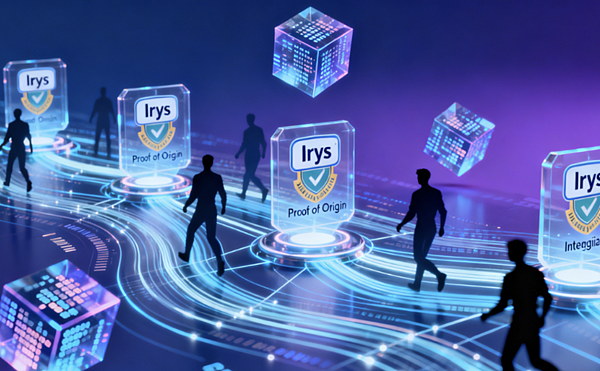
Irys challenges the passive nature of traditional data storage. In most systems, files depend on servers to be displayed, rely on platforms to survive and remain vulnerable to deletion, manipulation or silent replacement. Once a file leaves a device, almost nothing about its journey can be verified. Irys introduces a different model. Whenever content is uploaded, it receives a timestamp, a signature, a content hash and contextual metadata. Together these elements form a durable identity that persists over time.
 
Instead of treating data and logic as separate worlds, Irys allows smart contracts to interact with full file contents directly. Contracts can inspect an image, validate text or compare entire datasets without relying on centralized APIs. Decentralized applications gain a new form of autonomy because everything needed to authenticate a file exists on chain. As a result, data becomes an active part of computation rather than a silent piece of storage. It can trigger logic, support decisions and provide cryptographic proof of its own origin.
 
This identity-driven structure unlocks new possibilities across industries. NFTs can include dynamic media that updates according to real user behavior. AI developers can train models using datasets with traceable origins. DePIN networks can anchor sensor history on chain, allowing insurance or device coordination to operate on verifiable logs. Social networks can give users true ownership of their content, allowing posts and relationships to move freely across applications. None of this requires trust in a single authority. The data itself enforces authenticity.


THE TRUTH WAR IN THE AGE OF DEEPFAKES
Deepfake technology reshaped the internet in subtle but powerful ways. More synthetic images, voices and videos appeared online with no clear indication of where they came from. Users began doubting what they saw, yet the deeper problem lay in the lack of a shared reference system for verifying truth. Evidence could be created instantly. Narratives could be manipulated at scale. Even simple public records could be spoofed with little effort.
 
Irys addresses this crisis at the base layer. Every file uploaded to the network receives immutable origin information. Its timestamp, submitting address and full binary content become part of a permanent record. Attempts to modify or replace the file later can be detected immediately because the history cannot be altered. In this structure, real content gains a permanent advantage that fake content cannot imitate. Authenticity becomes a built-in property instead of an external claim.
 
This shift benefits many fields. Journalists can demonstrate that footage remains unedited. Scientists can secure experiment results to prevent disputes over data integrity. Courts can rely on cryptographic evidence instead of unverifiable screenshots. AI developers can trace training data to understand how models form behavior. Corporations can anchor compliance or audit records on chain. Supply chains can log every step a product takes, forming a transparent timeline across locations.
 
In environments where deception is easy and trust is fragile, Irys strengthens truth by tying it directly to cryptographic guarantees. Instead of detecting fakes, the system reinforces reality by making authenticity provable.


WHEN DATA BECOMES PART OF CIVILIZATION
Digital systems of the future will depend on data as their most important component. Intelligent agents, automated infrastructures and global networks require information that remains consistent over time. Irys gives data the ability to carry identity, context and permanence. It allows information to participate in long-term processes instead of acting as disposable content.
 
Cities may use Irys to capture continuous environmental readings that support public planning, insurance logic and climate modeling. AI agents could store their learning history on chain, creating a transparent record of how decisions evolve. Users in social ecosystems may retain ownership of their posts, connections and interactions across platforms. Enterprises could place operational or audit data on chain to eliminate disputes. Supply chains can anchor events that show each transfer of goods in a clear timeline.
 
All these scenarios rely on one principle. Data must be able to prove where it comes from. Without that, trust collapses. Once trust collapses, every digital system built upon it becomes unstable. Irys fills this missing layer by giving information a durable, verifiable identity that does not rely on any single institution. In an era dominated by deepfakes and synthetic reality, such a foundation may become one of the most essential forms of digital infrastructure for future generations.
(繼續閱讀...)
文章標籤

matthewmkt0617 發表在 痞客邦 留言(0) 人氣(2)

  • 個人分類:
▲top
  • 12月 03 週三 202501:12
  • Robinhood and Susquehanna Target Prediction Markets Shake-Up

Robinhood and Susquehanna Targ
A SHIFT YEARS IN THE MAKING
 
When Robinhood and Susquehanna International Group announced plans to acquire a majority stake in MIAXdx — formerly LedgerX — the news didn’t immediately spark headlines. Yet beneath the surface, this move represents a structural shift: the convergence of retail brokerage access, institutional liquidity, and fully regulated derivatives infrastructure.
 
LedgerX had once been associated with the now-bankrupt FTX empire. After the collapse, Miami International Holdings acquired the exchange in 2023, giving it a new identity and regulatory lifeline under the MIAX umbrella. MIAXdx retained a valuable advantage: approval from the Commodity Futures Trading Commission as a Designated Contract Market and Derivatives Clearing Organization.
 
Now, another transformation is underway. MIAX will retain about 10% of the business, while the remaining 90% will transfer to a group led by Robinhood. Financial terms haven’t been disclosed, but the ambition is clear: this isn’t just an acquisition. It is an attempt to control the full lifecycle of listing, clearing, and trading event-based derivatives.


WHY THIS DEAL MATTERS
 
While Robinhood and Susquehanna already have exposure to prediction markets, they have always operated through third-party platforms. Robinhood offers event contracts to retail users through Kalshi, and Susquehanna serves as a market-maker there. But relying on external exchanges comes with limitations — particularly around listing flexibility, settlement rules, and contract expansion.
 
This acquisition removes those constraints. Instead of participating in someone else’s marketplace, the two companies will own the infrastructure. Robinhood will serve as the controlling partner, while Susquehanna will act as the initial liquidity provider, ensuring that once the exchange goes live, traders will have active counterparties from day one.
 
The pairing of a retail-focused trading platform with a major institutional liquidity engine is rare — and intentional. It positions both companies to shape the next phase of regulated prediction-based products.


REGULATION AS A COMPETITIVE ADVANTAGE
 
Prediction markets have always attracted interest, especially from users looking to trade outcomes rather than traditional assets. However, regulatory uncertainty in the United States has slowed widespread adoption.
 
MIAXdx changes the equation. With its CFTC-regulated market and clearing approvals, the exchange offers a pathway to scaling event contracts under a framework traditionally reserved for futures and options. Rather than operating under narrow exemptions or limited contract caps, the new partnership has the regulatory positioning to expand into larger, standardized products designed for both retail and professional users.
 
This gives prediction markets something they have historically lacked: regulatory stability at industrial scale.


THE STRATEGIC PLAY BEHIND 2026
 
The new exchange is expected to begin operations in 2026, and the timing is deliberate. Prediction markets tend to attract attention during periods of heightened political or economic uncertainty. Beyond election-driven interest, traders increasingly use event-based products to express views on economic releases, policy outcomes, commodity disruptions, and macro-level forecasts.
 
Retail investors want new instruments beyond equities and crypto, while institutions are seeking ways to model probability more directly. Robinhood brings distribution. Susquehanna brings liquidity. MIAXdx brings regulatory legitimacy.
 
Together, they form a structure capable of scaling these products far beyond niche experimentation.


A NEW PHASE FOR MARKET DESIGN
 
Financial markets have expanded steadily toward alternative assets, fractional access, and more flexible contract structures. Prediction markets push that progression one step further: trading the probability of real-world outcomes.
 
Rather than simply speculating on price movement, traders gain the ability to price information itself. If successful, this model could evolve into something closer to a real-time forecasting layer for finance, policy, and even public decision-making.
 
The acquisition positions MIAXdx not just as a rebranded LedgerX, but as a potential foundational layer for this emerging category of event-based financial infrastructure.


WHERE THIS GOES NEXT
 
There are still open questions:


Will the marketplace remain focused solely on event-driven contracts, or expand into crypto-adjacent derivatives?


Will regulators impose new limits, or normalize these products as they did with options decades ago?


And will retail investors treat event markets as a tool for speculation, hedging, or something new entirely?
 
None of those answers are clear yet. What is clear is that prediction markets are no longer operating at the fringe of finance. With this acquisition, they are moving into the regulated mainstream — with retail access, institutional liquidity, and clearing infrastructure aligned under one ecosystem.
 
This marks the beginning of their institutional era.
(繼續閱讀...)
文章標籤

matthewmkt0617 發表在 痞客邦 留言(0) 人氣(3)

  • 個人分類:
▲top
  • 12月 03 週三 202500:27
  • Nado: The Moment Speed Woke Up

Nado: The Moment Speed Woke Up
THE FIRST HEARTBEAT IN THE DARK
 
Late at night during Korea Blockchain Week, the crowd had already disappeared and the noise had faded. Only the traders who lived in real markets were still awake. A few market makers and quant specialists sat around a wooden table, trading views on the day’s chaos while their attention slowly shifted toward their phones. On the screen a new interface moved with an unusual pulse. Depth refreshed like someone breathing. Prices slid across the book with effortless motion. Orders confirmed so quickly they interrupted thought itself. No announcements had been made and no branding tried to impress anyone. Yet every person at that table sensed the same thing. The product on their screens did not behave like anything that usually exists on chain.
 
The name behind this quiet shock was Nado. It had almost no public profile and no marketing push. Rumors tied the architecture to engineers who once built critical systems inside Kraken. That heritage could be felt in its silence. The interface felt like a machine shaped by people who understood real execution risk rather than people experimenting in a sandbox. The room changed as they watched the book move. Nothing about it needed to be explained. The reaction came from instinct. For the first time an on chain exchange showed the kind of motion that signals a new ceiling being broken.
 
Speed cannot be faked. It is either present or missing. That night everyone understood speed had arrived for real. And this was only the first heartbeat.


WHEN THE CHAIN STOPS BEING SLOW EVERYTHING CHANGES
 
Across the industry the same barrier had held perpetual DEXs back for years. Block times created unavoidable friction. Oracle delays weakened price discovery. Order books behaved like static images instead of live markets. Users chasing points were fine. Traders who needed precision were not. Teams had tried countless techniques to work around these limits. All of them still ended up constrained by the pace of the chain itself.
 
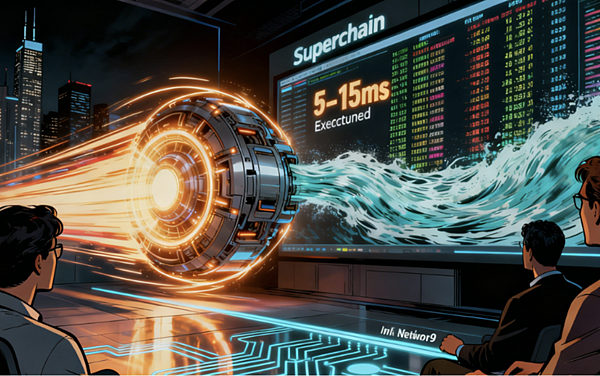
A different picture formed the moment people opened Nado. The interface responded before the mind finished a thought. The order book updated in a smooth continuous rhythm. Orders landed almost instantly. The experience looked and felt much closer to a centralized exchange than a decentralized one. The shift came from a redesigned relationship between execution and settlement. A high performance matching engine handled trades in a low latency environment and then sent finalized results to Ink for secure settlement. Execution gained speed while custody stayed verifiable. The two worlds finally met without compromise.
 
Once that speed became real the market’s behavior began to shift. Market makers reduced spreads because latency risk no longer punished them. Quant teams considered moving strategies on chain because feedback loops finally matched their needs. Large orders met deeper and more stable books because refreshes came quickly enough to support real activity. The wall that separated on chain trading from traditional execution started to fall. That single change opened the door to a very different future.
 
Speed acts like a structural rewrite. When rewritten well everything built above it starts to transform.


KINETIC COLLATERAL AND THE FIRST TRUE FLOW OF CAPITAL ON CHAIN
 
Beneath the fast interface lay another breakthrough. Traditional on chain margin models scattered capital across multiple isolated compartments. Profits in one position could not protect another. Spot holdings sat idle. LP tokens were locked into a single purpose. Capital was divided into pieces that could not help one another. The design limited efficiency and shaped strategy in restrictive ways.
 
Kinetic collateral broke that pattern. Instead of treating every asset as a separate unit it merged all value into a single dynamic pool. Spot positions unrealized PnL and NLP liquidity shares all contributed to one real time margin base. The pool adjusted itself continuously and supported the entire account. Capital took on new flexibility. It could protect risk expand positions fund hedges or amplify yield. A trader’s account became a moving system rather than a fixed arrangement of isolated blocks.
 
Professional traders noticed the difference immediately. The system allowed chain based trading to behave the way trading is supposed to behave. Efficiency rose sharply. Strategies gained room to develop. Risk management became more natural. The account behaved like flowing capital instead of static buckets. The change was not a minor improvement but a complete shift in how on chain margin could work.
 
A river replaces the old containers. Once capital can move freely the entire environment begins to open.


A NEW TRADING ERA IS GROWING FROM INK
 
Nothing about Nado makes sense if viewed as a standalone DEX. It belongs to a larger design. Ink Network was built quietly by Kraken with a clear focus on high performance financial activity rather than retail hype. It aims to provide speed security and interoperability for applications that need more than cosmetic innovation. Nado became the first major engine to run on this foundation.
 
By demonstrating what the chain can handle Nado effectively sets the tone for the entire ecosystem. Its trading experience shows Ink’s raw capability. Its margin engine showcases how complex financial logic can live on chain. Its NLP pool connects passive capital and market makers in a new structure. Its SDK opens the door for bots and quant funds to migrate with minimal friction. Everything about the architecture feels like it came from people who built systems carrying real liquidity.
 
In the coming cycle Nado may evolve into the central liquidity layer of Ink. It may become the primary perpetual venue across the Superchain. It may also grow into the natural on chain extension of Kraken’s user base. The product does not need to chase every narrative. One thing matters above all. Deliver the best on chain trading experience available. Once that core is strong the surrounding layers will grow around it.
 
When execution becomes fast when capital becomes fluid and when the line between CEX and L2 begins to fade the purpose of on chain trading changes. It stops being a contest between decentralization and centralization. It becomes a question of how mature exchange design can find new form on chain. Nado might be the point where that new form begins.
 
Read more:
Tensor: Redefining Trading on Solana
Hello Trade and the Quiet Opening of a New Global Market
 
Reference source:
Kraken Launches Nado DEX on Ink Network, Entering Testing Phase
Announcing Ink: The new DeFi destination
(繼續閱讀...)
文章標籤

matthewmkt0617 發表在 痞客邦 留言(0) 人氣(5)

  • 個人分類:
▲top
  • 12月 01 週一 202518:29
  • CoinRank Daily Data Report (11/27)|Australia Moves to Regulate Crypto Platforms

CoinRank Daily Data Report (11
Australia has introduced a new consumer protection bill that officially brings crypto platforms under financial services regulation.
(繼續閱讀...)
文章標籤

matthewmkt0617 發表在 痞客邦 留言(0) 人氣(4)

  • 個人分類:
▲top
  • 12月 01 週一 202518:11
  • CoinRank Daily Data Report (12/01)|PIPPIN Soars 61% as Bulls Tighten Control

CoinRank Daily Data Report (12
PIPPIN Jumps 61% Against Market as Analysts Flag Strong Bull Control
 
GMGN data shows Solana meme token PIPPIN is surging against the broader market weakness, now trading at 0.1798 USDT, up 61% in 24 hours.
 
Analyst @frontrunnersx notes concentrated accumulation activity, with several wallets continuously buying and showing no major sell-offs. This aggressive positioning has repeatedly forced short liquidations and pushed the price higher.
 
One wallet accumulated around 200k USD worth of PIPPIN six days ago and exited after a full price doubling. The same wallet is now applying a similar strategy to ARC.


SocGen: Fed Likely to Cut Rates Again Next Year, UST Yields Have Room to Fall
 
Societe Generale strategists said upcoming data should continue to show a resilient US economy, sticky inflation, and a slightly weakening labor market. Despite this backdrop, they expect US Treasury yields to keep drifting lower through the end of 2026.
 
Following the December rate cut, the bank forecasts two more Fed cuts in 2026, with the 2-year yield easing to 3.20% and the 10-year yield sliding to 3.75% by late 2026.


Matrixport: Global Policy Shift Caps Bitcoin at 92,000 as Momentum Fades
 
Matrixport says Bitcoin has once again stalled at the 92,000 USD resistance level, with upward momentum slowing. Despite expectations of a Fed rate cut next week, related ETFs are seeing only modest net inflows, leaving overall demand too weak to support the idea of strong institutional re-entry.
 
At the same time, Japan’s tightening signals are adding stress to global markets. The 2-year JGB yield has climbed above 1 percent for the first time since 2008, prompting investors to reassess whether major central banks can maintain a synchronized easing cycle.
 
In this environment, even a dovish message from the Fed may be insufficient to offset tightening expectations elsewhere. The policy backdrop remains tilted toward caution, giving institutions a clear rationale to keep reducing Bitcoin exposure.
(繼續閱讀...)
文章標籤

matthewmkt0617 發表在 痞客邦 留言(0) 人氣(6)

  • 個人分類:
▲top
  • 12月 01 週一 202517:10
  • CoinRank Daily 11/28: Only 11 Chains Earned $100K+ This Week

CoinRank Daily 11/28: Only 11
Only 11 public blockchains generated over $100,000 in revenue in the past 7 days.
 
According to Nansen data, only 11 public blockchains generated over $100,000 in revenue in the past 7 days. The top 6 are Tron, Ethereum, Solana, BNB, Bitcoin, and Base. They account for over 95% of on-chain user spending. The vast majority of the remaining public blockchains have low activity, with some generating near-zero revenue.


The “October 11th Insider Whale” has closed its long positions of 15,000 ETH in batches, profiting $846,000.
 
The “October 11th Short Insider Whale” has closed its long positions. It just closed its long positions of 15,000 ETH ($45.32 million) in batches, ultimately profiting $846,000.
 
Ultimately, the long position lasted less than four days before ending in profit. As of now, only the BTC long position from November 8th is currently showing a loss; all others are profitable, with the account accumulating a profit of $101 million.


Arthur Hayes: Price Discovery for Major US Tech Stocks and Indices Expected to Occur in the Perpetual Contract Market
 
BitMEX co-founder Arthur Hayes published an article today titled “Survival of the Fittest: How Perpetual Contracts Are Disrupting Traditional Finance,” pointing out that traditional finance (TradFi) is desperately trying to maintain its dominance in stock trading. It will be very interesting to observe how they respond to the rapid market acceptance of stock index perpetual contracts. The first perpetual contract sector to dominate the market will be offshore trading of US stock price risk. US stocks, and all stocks, will eventually be tokenized. However, stock index perpetual contracts do not rely on stock tokenization to succeed. Stock perpetual contracts already have mature infrastructure that allows for rapid scaling. Currently, daily trading volume for stock index perpetual contracts exceeds $100 million. As traders and market makers become familiar with the contract specifications, trading volume will soon reach billions of dollars daily. Given the frequent breaking news and announcements from around the world after the TradeFi market closes every Friday, stock index perpetual contracts will become a tool for institutional and retail traders to hedge risks over the weekend. This will force major US securities trading platforms to implement 24/7 trading faster than originally planned.
 
It is predicted that by the end of 2026, price discovery for the largest US tech stocks and major stock indices (such as the S&P 500 and Nasdaq 100) will occur in the perpetual contract market for retail investors. The market landscape will change significantly when financial media show S&P 500 perpetual contract quotes as the best pricing source, rather than the CME Globex version. Furthermore, it states that the next wave of cryptocurrency exchange billionaires will come from the intersection of perpetual contracts and stocks.
(繼續閱讀...)
文章標籤

matthewmkt0617 發表在 痞客邦 留言(0) 人氣(4)

  • 個人分類:
▲top
  • 11月 30 週日 202513:46
  • GaiAI: THE WILD AGENT NETWORK GROWING OUTSIDE THE SHADOW OF AI GIANTS

GaiAI: THE WILD AGENT NETWORK
GaiAI: A Rebellion That Started From the Edge
(繼續閱讀...)
文章標籤

matthewmkt0617 發表在 痞客邦 留言(0) 人氣(0)

  • 個人分類:
▲top
  • 11月 29 週六 202510:49
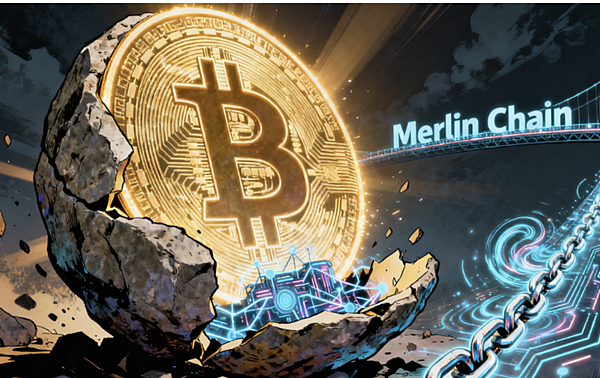
  • Who Is Rewriting Bitcoin’s Future Merlin Chain and the New Order Ahead

Who Is Rewriting Bitcoin’s Fut
THE SLEEPING GIANT OF BITCOIN AND THE BREAKING OF ITS SILENCE
 
In the crypto world, Bitcoin has always been the silent giant. It is steady and cautious, and it rarely bends for new trends. For more than a decade, it has protected its base layer with extreme discipline. This has kept it secure, but also kept it limited. It records data well, but it cannot compute. It holds value, but cannot activate it.
 
Then something unexpected happened. Ordinals, BRC20, Bitmap and Atomicals turned the Bitcoin mainnet into an engine for asset creation. Thousands of inscriptions appeared. Liquidity moved again. Prices surged. A new class of users entered the chain.
 
But the old limits remained. Assets could be minted, yet they had nowhere to go. They could not enter lending markets or yield protocols. They could not interact with smart contracts. They could not join automated strategies. Everything stayed frozen on the base layer.
 
Merlin Chain stepped into this gap. It did not try to change Bitcoin. It built an extended space beside it. This gave Bitcoin native assets a place to move, earn and interact, while still keeping their original identity.
 
This was a different type of L2. It was not a copy of Ethereum’s model. It was a path that grew out of Bitcoin’s own structure. For the first time, Bitcoin native assets could move in a programmable environment while staying anchored to the main chain.
 
Bitcoin had waited a long time for an exit. Merlin Chain made that exit visible.


A TEAM MEETING ITS MOMENT
 
Merlin Chain’s origins go back to the days of Recursiverse. The team explored recursive inscriptions long before the L2 came to life. They worked on data structures, metadata formats and new ways to store information on Bitcoin. It was an experimental era filled with creative attempts.
 
Bitmap Explorer turned blocks into digital land. BRC420 created modular formats that could be combined and reused. Blue Box became a symbol of early success when its price grew from cents to tens of thousands of dollars. It brought momentum to the ecosystem and shaped a strong early community.
 
These users loved Bitcoin but felt limited by it. They wanted real use cases, not only speculation. They wanted more than simple transfers. They wanted a way for assets to grow.
 
The team saw the same tension. Bitcoin was producing more assets than ever, yet none of them could expand. There was no execution layer. There was no programmable space. So in January 2024, they shifted direction. They built Merlin Chain as a dedicated execution layer for Bitcoin native assets.
 
This was more than a technical project. It was a move from building tools to building an entire ecosystem. The chain grew quickly because the team already had a community, assets and liquidity. It was not starting from zero. It was extending something that already existed.
 
Capital support made the push stronger. OKX Ventures offered funding, wallet support and exchange connections. More than twenty other institutions added reach and developer resources. Merlin Chain moved from launch to ecosystem maturity in a very short time.
 
Its rise was not an accident. The market was ready. The timing was right. The team understood the space. They wanted to build more than infrastructure. They wanted to create a true Bitcoin native economy.


WHEN ZK MEETS BITCOIN THE CHALLENGE BECOMES REAL
 
Letting Bitcoin assets move to a new environment is only the surface problem. The deeper question is trust. Bitcoin cannot verify complex logic. It cannot check proofs or run smart contracts. Any L2 built on Bitcoin must answer one question. How does Bitcoin know the L2 is honest
 
Merlin Chain built its answer around a layered approach. Polygon CDK provides the ZK framework. Transactions are batched and turned into proofs. Since Bitcoin cannot verify these proofs directly, Merlin uses a decentralized oracle network. These nodes validate the state roots and sign them before they are recorded on the Bitcoin mainnet with Taproot.
 
Bitcoin becomes the anchor. The ZK layer becomes the executor. The oracle network becomes the verifier. This keeps the base layer untouched while giving the L2 room to grow.
 
ZK proofs require heavy computation. Merlin uses the Lumoz network to distribute this work. Data availability is another challenge. Early versions used a committee model, but this created centralization risk. In 2025, Merlin integrated Nubit and Celestia. This gave the system an external data layer where anyone could reconstruct historical data.
 
Cross chain security is also important. Merlin does not control the bridge alone. It uses Cobo MPC for key management. Private keys are split. No single party has control. All actions require multi party computation. This protects billions of dollars in locked value.
 
The two upgrades in November 2025 marked a turning point. One improved verification speed. The other fixed performance issues during peak usage. These were signs that Merlin Chain was moving from narrative to engineering stability.
 
Merlin’s design is complex because Bitcoin’s limitations force it to be. It must operate inside a conservative system while offering a programmable environment. This requires both precision and patience.
 
 
It is a difficult path, but it pushes the Bitcoin ecosystem forward.


THE NEXT FIGHT WILL DEFINE MERLIN CHAIN’S FUTURE
 
Merlin Chain reached an early peak during its airdrop cycle. TVL exceeded three point five billion dollars. Activity exploded. New protocols launched quickly. It became the largest Bitcoin L2 in both scale and community.
 
True sustainability is different from explosive growth. After incentives fade, ecosystems must stand on their own.
 
MerlinSwap handled the trading needs of Bitcoin native assets. It lowered slippage and made inscriptions easier to trade. SolvBTC gave users a way to earn yield directly on Bitcoin native liquidity. UniCross connected the L2 and L1 for inscriptions and runes. Bitmap Game carried the non financial part of the ecosystem with entertainment and gameplay.
 
Together, these applications formed a base layer of economic activity. Bitcoin creates assets. Merlin activates assets. This pattern is healthier than speculation alone.
 
Merlin also expanded across chains. Bridging M BTC to the Sui network opened access to high performance DeFi. This was not a small decision. It signaled that Merlin wanted to become a liquidity hub for Bitcoin native assets across many chains.
 
Competition is strong. Stacks attracts institutions. B2 Network grows through its community narrative. BitVM may reshape the way verification works on Bitcoin. But Merlin already holds deep liquidity and a large user base. This gives it a strong foundation.
 
The hardest part is ahead. Decentralizing the sequencer. Reducing trust assumptions. Completing external data availability. Building automated verification. These tasks will decide whether Merlin Chain becomes long term infrastructure in the Bitcoin ecosystem.
 
Bitcoin is moving from the age of assets to the age of execution. Merlin Chain stands at the center of this shift. It carries expectations, pressure and opportunity. It also stands in the front line of a new order forming around Bitcoin.
 
The silence of Bitcoin is breaking. Merlin Chain is one of the forces pushing it forward.
 

Read more:


Nado: The Moment Speed Woke Up


Reference source:


Merlin Chain(MERL) Whitepaper


What Are the Top Bitcoin Layer-2 Networks of 2025?


(繼續閱讀...)
文章標籤

matthewmkt0617 發表在 痞客邦 留言(0) 人氣(0)

  • 個人分類:
▲top
12...5»

個人資訊

matthewmkt0617
暱稱:
matthewmkt0617
分類:
財經政論
好友:
累積中
地區:

熱門文章

  • (4)CoinRank Daily 11/28: Only 11 Chains Earned $100K+ This Week
  • (6)CoinRank Daily Data Report (12/01)|PIPPIN Soars 61% as Bulls Tighten Control
  • (4)CoinRank Daily Data Report (11/27)|Australia Moves to Regulate Crypto Platforms
  • (5)Nado: The Moment Speed Woke Up
  • (3)Robinhood and Susquehanna Target Prediction Markets Shake-Up
  • (2)Irys: Rebuilding Trust in the Age of Synthetic Reality
  • (4)The First Hong Kong Crypto Asset Stock Has Arrived – Why Are More and More Web3 Projects Seeking IPOs?
  • (3)Protocol X402: Payment Revolution and Compliance Challenges in the Machine Economy Era

文章分類

  • 未分類文章 (1)

最新文章

  • Protocol X402: Payment Revolution and Compliance Challenges in the Machine Economy Era
  • The First Hong Kong Crypto Asset Stock Has Arrived – Why Are More and More Web3 Projects Seeking IPOs?
  • Irys: Rebuilding Trust in the Age of Synthetic Reality
  • Robinhood and Susquehanna Target Prediction Markets Shake-Up
  • Nado: The Moment Speed Woke Up
  • CoinRank Daily Data Report (11/27)|Australia Moves to Regulate Crypto Platforms
  • CoinRank Daily Data Report (12/01)|PIPPIN Soars 61% as Bulls Tighten Control
  • CoinRank Daily 11/28: Only 11 Chains Earned $100K+ This Week
  • GaiAI: THE WILD AGENT NETWORK GROWING OUTSIDE THE SHADOW OF AI GIANTS
  • Who Is Rewriting Bitcoin’s Future Merlin Chain and the New Order Ahead

動態訂閱

文章精選

文章搜尋

誰來我家

參觀人氣

  • 本日人氣:
  • 累積人氣: